Health and Safety Policy for Carpet Cleaners W3
 Our Carpet Cleaners W3 health and safety policy sets out the standards required to protect staff, clients, visitors, and any other people who may be affected by cleaning activities. We are committed to creating a safe working environment through careful planning, proper training, and consistent supervision. This policy applies to all carpet cleaning operations, including domestic and commercial work, stain treatment, equipment handling, and the use of cleaning agents.
Health and safety is a shared responsibility. Every cleaner is expected to work in a manner that reduces risks and supports a safe outcome. We aim to prevent accidents, injuries, property damage, and environmental harm by identifying hazards before work begins and by taking practical steps to control them. Our approach is based on risk awareness, safe systems of work, and the correct use of equipment.
 The company expects all staff to follow this policy at all times. No task should be started unless the worker understands the method, the materials involved, and the potential hazards. If a situation appears unsafe, the work must be paused until it can be made safe. This applies to every carpet cleaning service, whether the job is routine maintenance or a more demanding specialist cleaning task.
Training and competence are essential. All carpet cleaning staff receive instruction in safe lifting, chemical handling, machine use, emergency procedures, and personal protective equipment. Training is refreshed regularly to maintain good practice and to reflect any changes in equipment or procedures. Supervisors must ensure that workers are confident and competent before they carry out tasks alone.
Before any job begins, a basic assessment of the area is completed. This includes checking for trip hazards, electrical risks, poor ventilation, wet floors, fragile furnishings, and any item that could be damaged by moisture or agitation. The assessment also considers access routes, stairways, and the condition of the carpet itself. In many cases, a careful carpet care review helps determine the safest cleaning method.
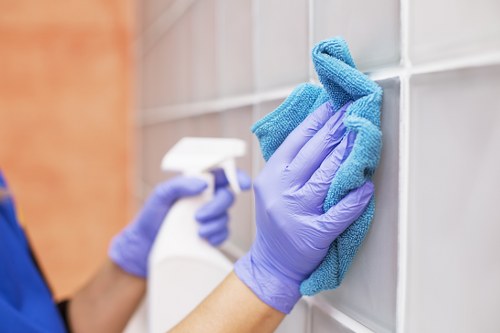 Cleaning products must be used in line with manufacturer instructions and internal procedures. Only approved solutions are permitted, and all containers must be labelled clearly. Staff should avoid mixing chemicals unless specifically authorised. Gloves, eye protection, and other protective items must be used when required. Good hygiene practices, including handwashing and prompt spill cleanup, are mandatory throughout the workday.
The safe use of machinery is a key part of this policy. Vacuum systems, extraction machines, and any associated electrical equipment must be inspected before use and maintained in good working order. Damaged cables, leaking hoses, or faulty switches must be reported immediately and the equipment taken out of service. Staff must not bypass safety features or use equipment in a way that could cause harm.
Manual handling is another important control area. Carpet cleaners often move equipment, solution containers, and small furnishings, so workers must use proper lifting technique and seek assistance for heavy or awkward items. Where possible, loads should be reduced, and routes should be cleared before carrying anything. Safe positioning and slow, controlled movements help lower the risk of strain or impact injuries.
Personal protective equipment, or PPE, must be worn whenever the task requires it. Depending on the job, this may include gloves, non-slip footwear, masks, or eye protection. PPE does not replace safe working methods, but it provides an additional layer of defence. Cleaners are responsible for checking that PPE fits correctly, is kept clean, and is replaced when worn or damaged.
Fire safety and emergency response are also part of the policy. Staff must know how to respond to an incident, who to alert, and how to leave the area safely if needed. Electrical equipment should never be left in a condition that could create a fire or shock hazard. Any accident, near miss, or unsafe condition must be reported promptly so that corrective action can be taken and future risk reduced.
We also expect all workers to consider the safety of customers and the public during carpet cleaning work. Warning signs should be used when floors are wet or surfaces may be slippery. Tools and materials should be kept tidy and out of walkways. Doors, cords, and cleaning zones must be managed carefully to reduce obstruction and prevent unnecessary exposure to risk.
 Supervisors are responsible for monitoring compliance, reviewing procedures, and supporting continuous improvement. They must ensure that equipment checks, incident reports, and maintenance records are kept accurately. Where trends or repeated issues are identified, corrective measures must be introduced. This may include extra training, revised procedures, or replacing unsuitable equipment to improve workplace safety.
 This health and safety policy is reviewed regularly to ensure it remains effective, practical, and suitable for modern carpet cleaning services. Updates may be made after incidents, changes in equipment, or improvements in professional standards. Everyone involved in Carpet Cleaners W3 work is expected to support this policy and contribute to a culture of safe, responsible, and careful cleaning.